AI-first underwriting. For the cyber line that finally needs it.
External scanning tells you what an attacker sees. Draxis is an AI-first platform that reads what each policyholder’s controls are doing, continuously and not at renewal, and projects the patterns up across your whole book.
Request a briefing →You are pricing risk from a point-in-time snapshot of a changing environment.
Renewal questionnaires reflect intent, not reality. External scan scores reflect what is visible to the internet, not what is happening inside the control environment.
The gap between what carriers know at underwriting and what is actually true six months later is where claims come from.
Underwriting still relies primarily on self-reported security posture data. Policyholders answer optimistically. Controls degrade between renewals. The data ages out the moment it is submitted.
External scan vendors surface what is visible from the internet. MFA enforcement gaps, EDR coverage failures, over-privileged identities, and lateral movement paths are invisible to outside-in tooling. These are the controls that determine claim outcomes.
Risk posture is dynamic. A policyholder who passes renewal screening in January may have material control gaps by March. Carriers have no signal between checkpoints. The first indication of degradation is the claim.
Inside-out risk signals. Not another outside-in score.
| Capability |
External scanning
Bitsight, SecurityScorecard, RiskRecon
|
Draxis |
|---|---|---|
| Signal source | Public internet surface | Internal control telemetry |
| MFA enforcement gaps | Not visible | Detected and quantified |
| EDR coverage by device | Not visible | Detected and quantified |
| Identity hygiene | Not visible | Detected and quantified |
| Conditional access gaps | Not visible | Detected and quantified |
| Open ports / exposed services | Visible | Not primary focus |
| TLS / certificate health | Visible | Not primary focus |
| Continuous monitoring | Score updated periodically | KRIs updated per control sync |
| Financial exposure mapping | Not provided | Mapped per finding, per tenant |
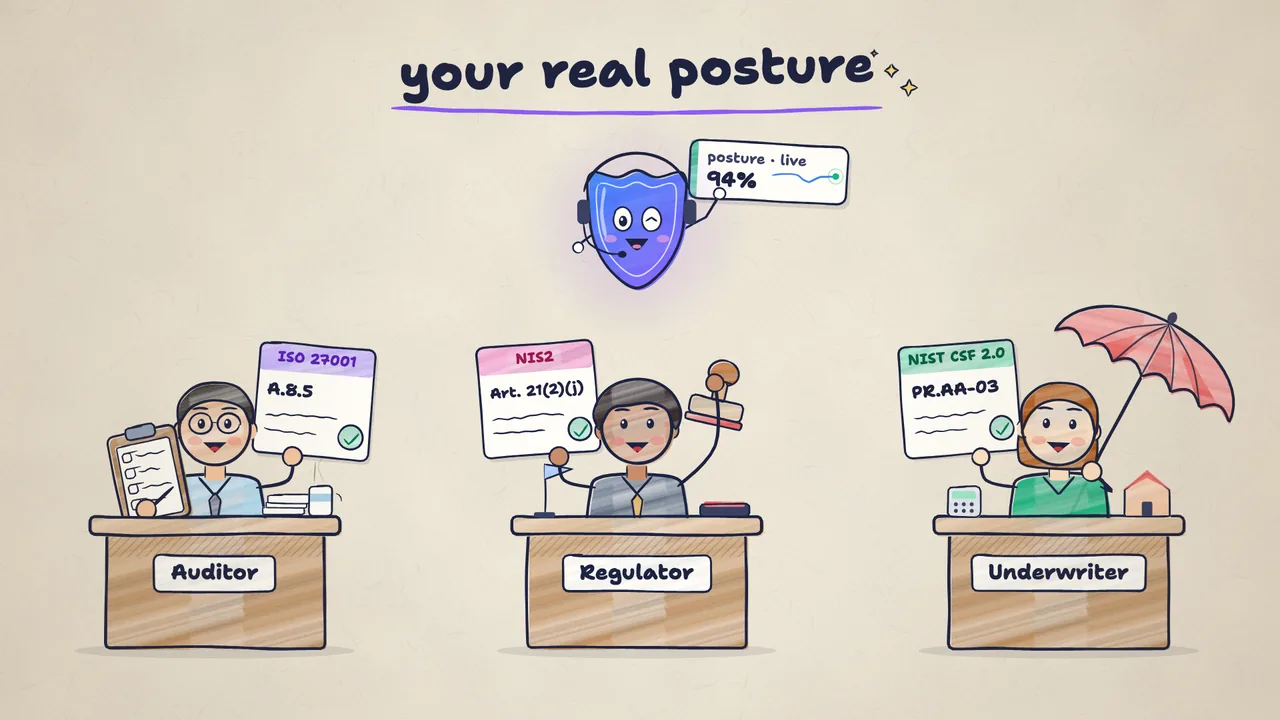
| Framework alignment | Not provided | NIST CSF, SOC 2, ISO 27001, SEC Cyber Rules, DORA, NIS2 |
| Questionnaire replacement | No | Partial. Structured KRI evidence replaces subjective self-reporting for covered control domains |
Draxis and external scanning vendors are complementary, not competing. External scanning covers the attack surface. Draxis covers the control environment. Both signals improve underwriting precision when used together.
How carriers and brokers put AI to work today.
AI-drafted underwriting narratives
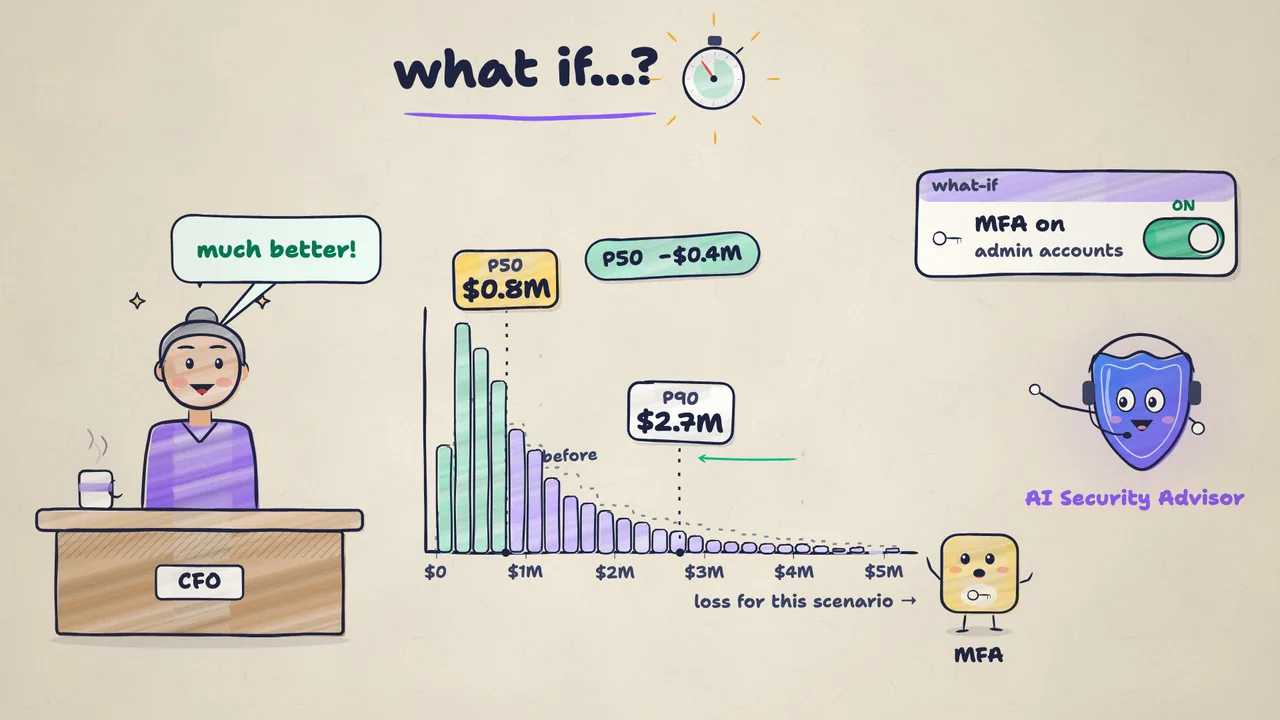
For each insured, AI assembles an underwriting-grade narrative: current control posture, scenario-level expected losses tied to coverage triggers, drift since binding, and recommended renewal terms. Verifiable evidence, not self-attestation.
AI portfolio early-warning
When AI detects a pattern in one insured that historically preceded claims in similar insureds, it alerts you with the cohort context. Your book itself becomes an early-warning system, long before the next renewal cycle.
AI loss-event ↔ policy mapping
AI maps catalog loss events to your policy language (sublimits, retentions, exclusions) so scenario outputs translate directly into expected indemnity, not abstract dollars. Cross-portfolio shifts summarized for underwriters in plain English.
AI-powered broker differentiation
Broker advisory practices use Draxis as the AI engine behind their SMB cyber risk service. An AI Security Advisor and expert panel under your brand, producing the renewal narrative your insureds’ carriers actually want to read.
Draxis fits into your existing carrier infrastructure.
Policyholder authorizes read-only access
At policy inception or renewal, the policyholder grants Draxis read-only API access to one or more of their existing security controls. Authorization takes under 10 minutes. Nothing is installed in the policyholder’s environment.
Draxis extracts and monitors KRIs
Draxis reads from the connected controls on a configurable cadence: daily, weekly, or per-event. Findings are mapped to financial exposure and framework alignment automatically. Material changes trigger alerts.
Signals surface in your workflow
KRI data is available via API to your existing policyholder portal, underwriting workflow, or data warehouse. Draxis does not require carriers to replace existing tooling. It adds the inside-out signal layer to whatever infrastructure you already operate.
This is a conversation, not a demo request.
If you are evaluating risk intelligence capabilities for your cyber book, or building a policyholder portal and looking for a continuous signal layer, we would like to speak with you.
We do not do automated demos for this segment. We do structured briefings with the right people on both sides.
Request a briefing →Or reach us directly at carriers@draxis.ai