The Cyber Risk Simulation Engine
Every frame is drawn live in plain JavaScript on a canvas: hand-inked strokes, marker fills and line boil, all generated from code. Space plays or pauses, ← → seek, C toggles captions, F goes full screen.
0:01 What would a ransomware attack on your payments stack actually cost you?
0:06 The Cyber Risk Simulation Engine answers in dollars, grounded in your real assets, identities and data, including the regulatory fines where you operate.
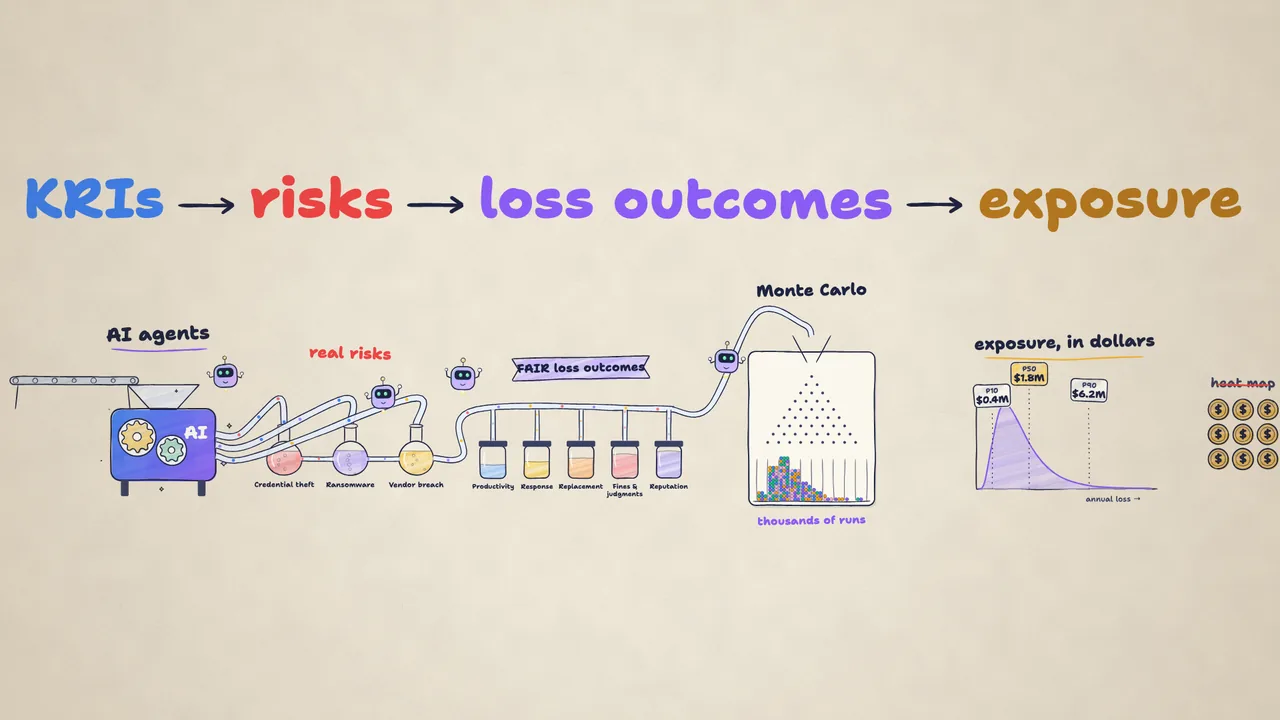
0:17 Pick a scenario and what it hits. The engine runs ten thousand Monte Carlo trials, drawing every loss from a range, not a single guess.
0:26 You get a P10, a P50 and a P90: a mild outcome, a typical one, and a severe one.
0:33 Chain scenarios together, from phishing to lateral movement to data theft, and watch the blast radius spread.
0:41 Your controls count, too. Each one takes a bite out of the loss, so you can see what every control is worth in dollars.
0:48 Ask what happens if you add MFA, and the numbers update in seconds.
0:54 Draxis. Don’t wait for the breach to read the signal.
The CRSE documentation covers the simulation primitives, attack chains, toxic combinations and the regulatory fine models. On the platform page, the AI surfaces section shows where simulation sits next to the rest of the risk program.
Carriers and brokers use the same loss distributions in underwriting. See Draxis for cyber insurers.
Overview · 1:04Read the Signal
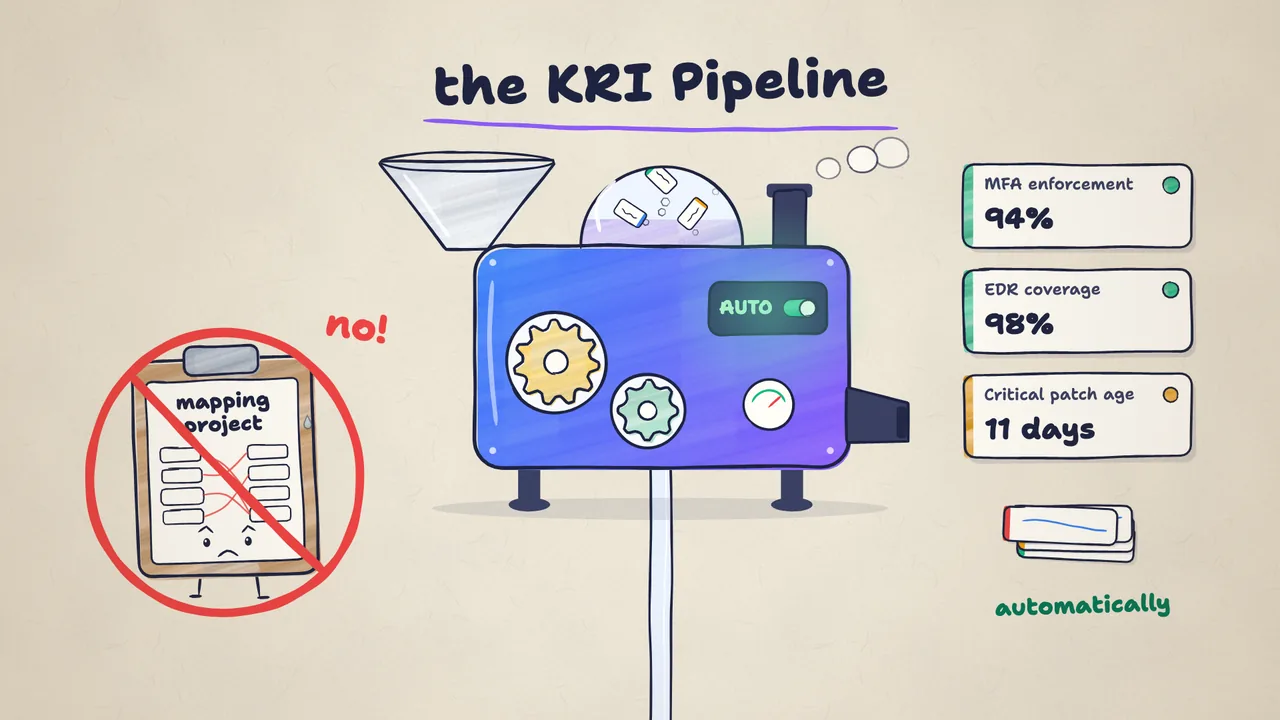
Deep dive 1 · 1:00The KRI Pipeline
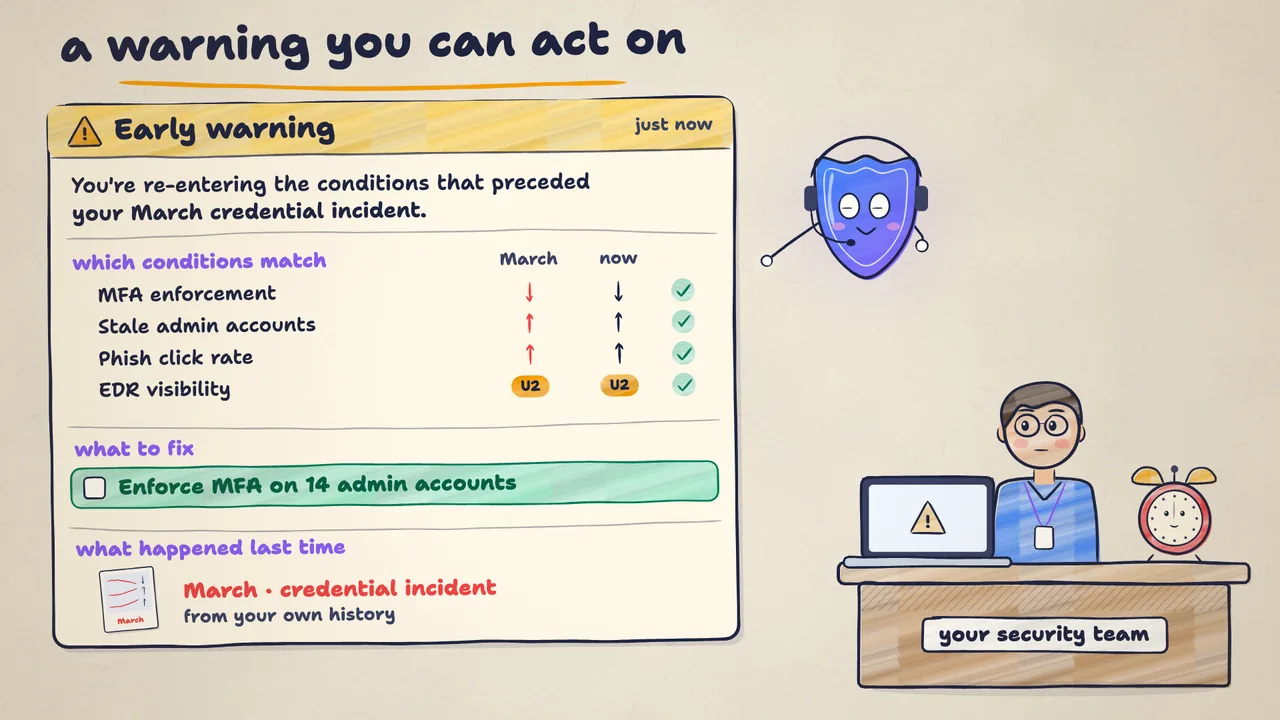
Deep dive 3 · 0:59Early Warning & Draxis Axon
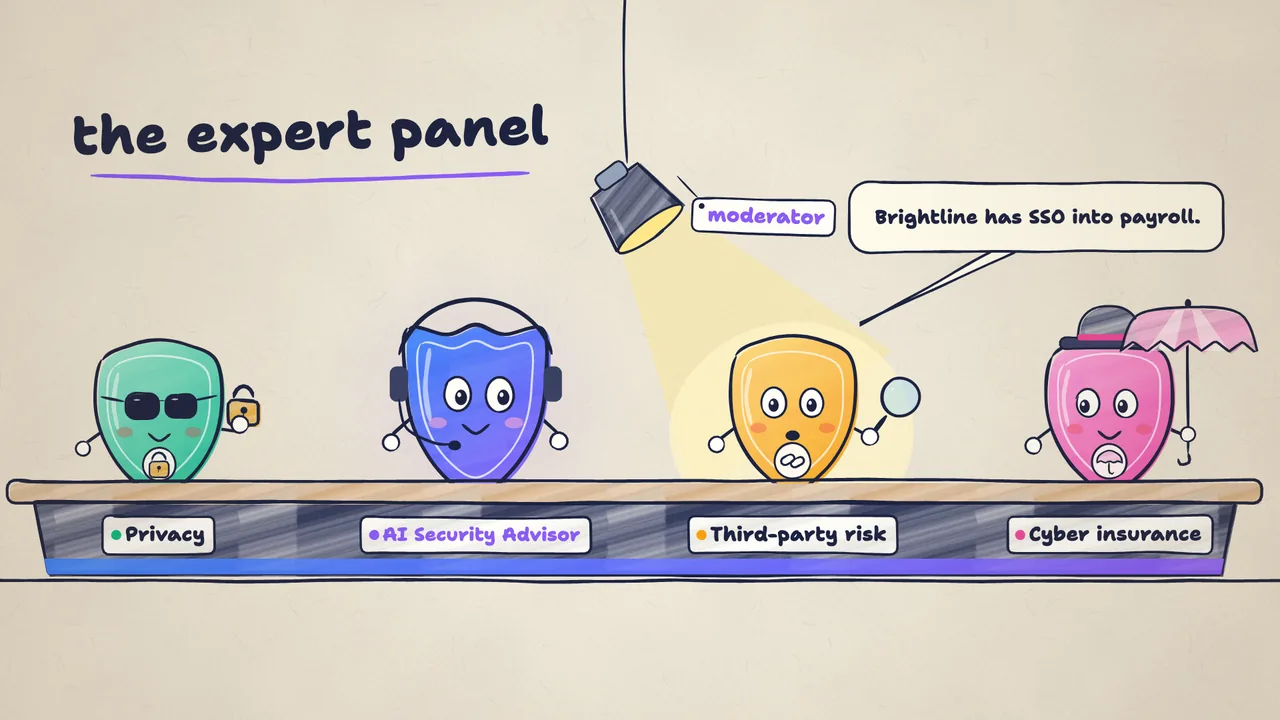
Deep dive 4 · 0:59The AI Security Advisor & Expert Panel
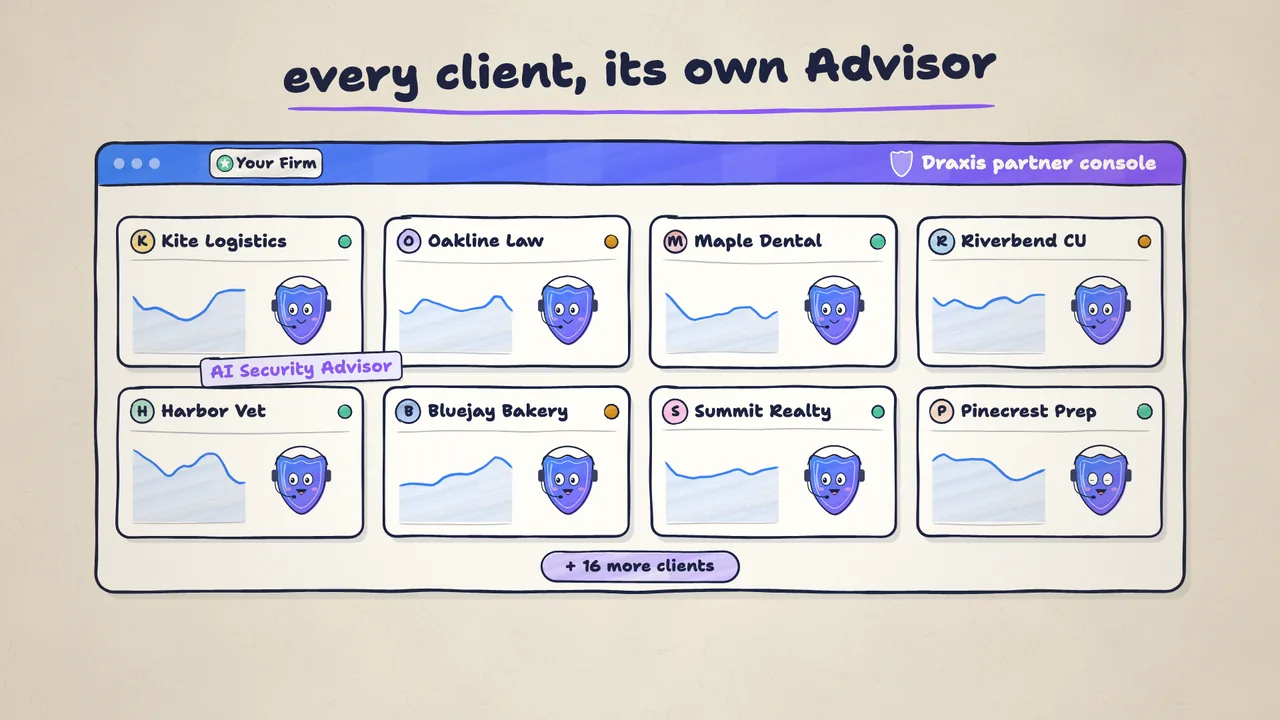
Deep dive 5 · 1:01The Partner Console for MSSPs
Deep dive 6 · 1:00NIST CSF & MITRE ATT&CK Mapping
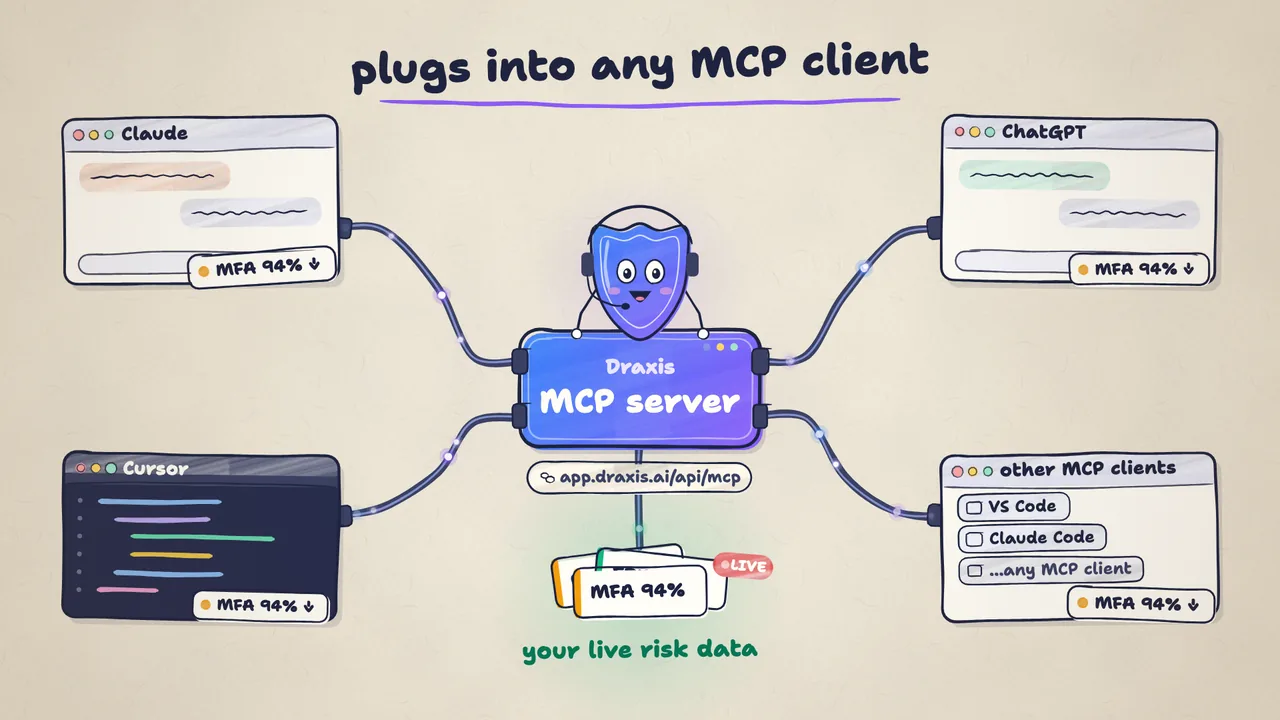
Deep dive 7 · 0:59The Draxis MCP Server